Introduction
Hi-Fi Rush is a game by Tango Softworks and published by Bethesda. It was released on January 25th 2023 having been revealed that same day. This unconventional launch from such a high profile publisher instantly earned the title some attention which only multiplied in the coming days thanks to the game’s other standout elements including it’s visuals, mechanics, and emphasis on music featuring music from bands such as Nine Inch Nails. This also worked in it’s favor as multiple publications rushed to cover the game, dramatically boosting it’s popularity and given it was already available this immediately transitioned into overwhelming sales numbers. But now that the drama regarding it’s released has died down and we’re left with the game itself to see whether it can stand on it’s own merits. So without further ado let’s begin!
Story
Hi-Fi rush begins with the main character, Chai, heading into the lobby of a corperate building where he’s asked to fill out some paperwork regarding his career aspirations. Immediately we get a great understanding of the type of person he is, jamming to the background music and playing an air guitar on his way to the front desk. This sort of wannabe rockstar is hopelessly oblivious as he signs away on the forms and ends up first in line for a program at a cybernetics factory that promises the opportunity of a lifetime. However it ends up just being a front for a shady operation to turn unsuspecting folks into menial workers on the corporations private island, a fate Chai narrowly dodges through an accident in the process of his implants.
The result of the incident sees Chai with a robotic arm but also his music player embedded in his chest, constantly filling him with music. Once the corporation learns of this mishap they send in a squad of security to deal with the ‘defect’ only for Chai to discover that attacking in sync with the music affords him increased strength, allowing his to dispatch the robots easily. Armed with this newfound power Chai attempts to escape the island which earns him the attention of Peppermint, an agent whose mission is to expose the corporation’s dangerous dealings. The two quickly form a pact to help one another out, Chai promising to act as the more tech oriented Peppermint’s boots on the ground, gathering intelligence while earning himself a way off the island.
This is about as far as I can go without spoiling but overall I’ll say it feels right at home with the rest of the game’s atmosphere. With a rapid fire pace that sees you exploring the island and leaving a trail of rocking destruction in your wake, it was definitely an enjoyable romp. One that was greatly enhanced by the cast of characters. Chai and Peppermint’s banter makes up the majority of the in-mission dialogue which is to the game’s strength. Their bickering back and forth makes for a lot of comedic moments, gradually seeing them from being unwitting allies to something more resembling genuine friends.
Aside from them the rest of the game’s cast is pretty stellar as well, primarily made up of the boss of each sector. Each one feels like straight of a Saturday morning cartoon in the best way possible, replacing any semblance of nuance with a kind of playful whimsy that blends effortlessly with the game’s atmosphere. There are also a few recurring NPCS sprinkled around to offer some humorous running gags, like a dreary secretary ignorant to Chai’s shenanigans or a Scottish box stacking robot getting progressively more fed up with Chai ruining his hard work.
Altogether I would say that the Hi-Fi’s writing style is one of it’s strongest points. Games this funny are a rare commodity these days as are ones that aren’t afraid to get a little wacky. Even still it never goes too far into comedy, still telling a coherent story that’s not particularly groundbreaking but is supported by a colorful cast of characters with fantastic performances
Gameplay
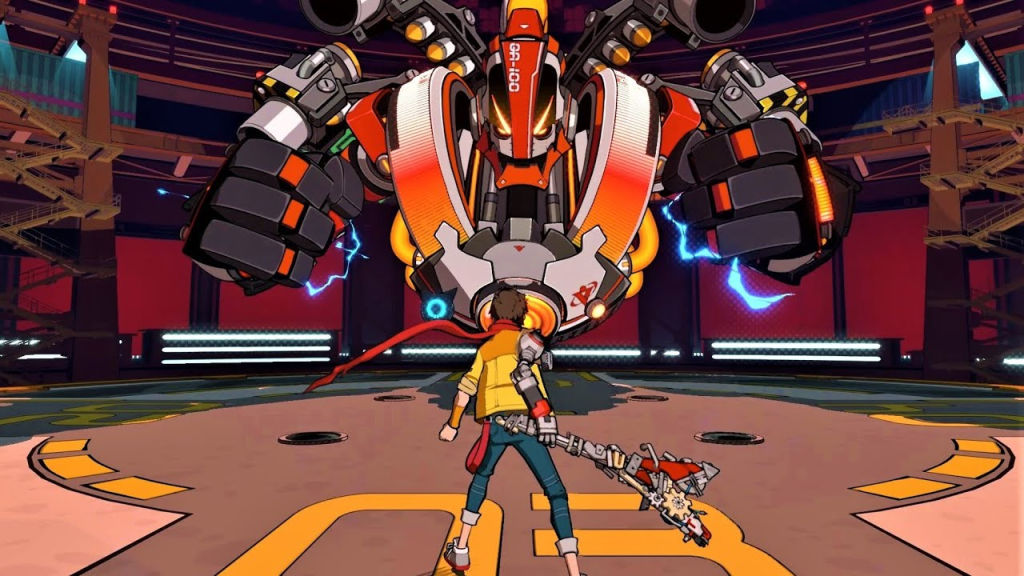
Hi-Fi Rush’s gameplay is a rather unique case that warrants a bit of additional explanation. At it’s score it’s a spectacle fighter in the same category as some heavy hitters like God of War, Devil May Cry, and Bayonetta. This style of game tasks the players with defeating their opponents in stylish, typically over the top fashion with levels typically ending in grading the player. An offshoot of the hack-and-slash genre spectacle fighters reward precision, reflexes, and the dimerization of combos by presenting the player with a higher score an often times a visual feast that feels just as good to watch as it does to play.
Hi-Fi Rush puts it’s own spin on these systems by mixing them with the mechanics more often found in rhythm games. As previously stated Chai’s powers come through music and that manifests itself through gameplay by boosting the player’s damage but attacking in time with the beat. But that’s not all as Chai’s powers also affect the world around him. Everything is to the beat of the background music, including the movements of the environment and the enemies own attacks. This means that if you can find the rhythm you can be an untouchable machine, weaving and striking with the score backing you up.
However it you’re anything like me this is unlikely. Personally I have no sense of rhythm so acting in time with the beat was essentially impossible to do consistently. Which is not the fault of the game as a lot is done to help alleviate the stress of this process. Aside from the music the backgrounds of the levels move in sync with the beat and soon into the first level you get a companion orb that pulses in time with the music. And if that’s not enough to can even put a rhythm bar on screen at any time which shows you exactly when you should be taking action. With all that said it’s still no easy task but thankfully the game is not too punishing when it comes to adhering to the music. Oftentimes it will be your score that takes the bigger hit rather than your progress. Though I do actually wish the game offered some sort of training mode which allowed you to practice in a safe environment. As the game is not a long one and it’s paced quickly they expect you to learn a lot of mechanics and combos in a short amount of time which can be more stressful then enjoyable.
In between these combat bouts though the player is usually asked to preform some simple platformer challenges with emphasis on simple. These moments are the game’s weakest points by a country mile. The issue is that they are both far too easy to complete and go on for much too long. Now it’s natural for action games to require downtime, as a matter of fact all of the previous examples of spectacle fighters I used actually utilize platforming as a manner of cooling off between larger combat sections. However those games often utilize either harder challenges or more engaging set pieces to make these sections more interesting.
There is also a bit of upgrade overload. Throughout the game you’ll get several different types of components to upgrade your arsenal. Scrap is the main currency but then there are also data chips, health vials, and turbo bottles which all create passive boosts to your character. While they are all put to use it can take a while for it to feel like you’ve built a fully functional character which is a problem in this genre not unique to Hi-Fi Rush.
These gripes aside I do feel like the gameplay is solid, with a stylish combat system that makes you feel unbelievably slick when you get the hang of it. There’s nothing quite like beating wave after wave of robots to the beat of a rock ballad in the background. And the game is never so punishing where it feels like you’re being pushed beyond your limits to match the beat. Even still the parts in between combat could use some work as the writing is doing most of the heavy lifting in keeping players engaged.
Presentation
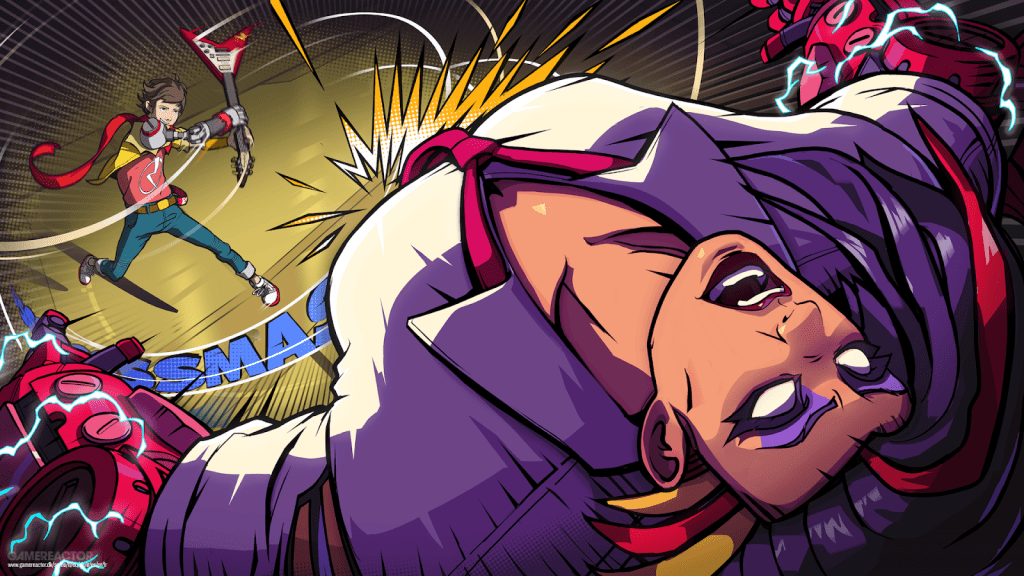
Hi-Fi Rush absolutely bleeds style. It is a title that wears it’s punk rock aesthetic like a badge of honor. The closest comparison I can think of is Sunset Overdrive, both games utilizing the graffiti look but while Sunset Overdrive goes for a more cell shaded design Hi-Fi feels more like it was pulled from the pages of a comic book or manga. And the unique approach doesn’t end there.
Hi-Fi Rush’s setting feels appropriately ‘out there’. Set in some futuristic techno island dominated by a corporation most people we see have some sort of robotic enchantments. It’s a great way to add some special twists on characters but they’re already a pretty cool looking group as is which is exactly what the game should be striving for. Chai with his robot arm and open jacket, peppermint with her pistol and robotic leg, and especially the villains all make for some fantastic and memorable the designs.
Which is not even close to where the good stuff ends for the visuals as the environments are another standout. Just because the game takes place on a factory island doesn’t mean it needs to sacrifice variety. You’ll travel across rooftops, deep into volcanic lava pits, and through hidden laboratories before the game is up. Each level has a visual flair that matches with the stage’s primary villain which ensures you’ll never get tired of looking at them nor forget who it is you’ll be fighting at the end.
And then there’s of course the soundtrack. A fantastic collection of rock ballads that act as the game’s lifeblood. Building a game’s entire presentation around it’s music is a risky move but one that pays off in spades for Hi-Fi rush. While some of the tracks can blend together a bit towards the latter half of the levels the fact that the bosses bring a whole new sound into the mix that won’t stay the same for long. The bosses will even change the music as their fights go on which adds another layer of both complexity and intrigue to their fights.
Summary
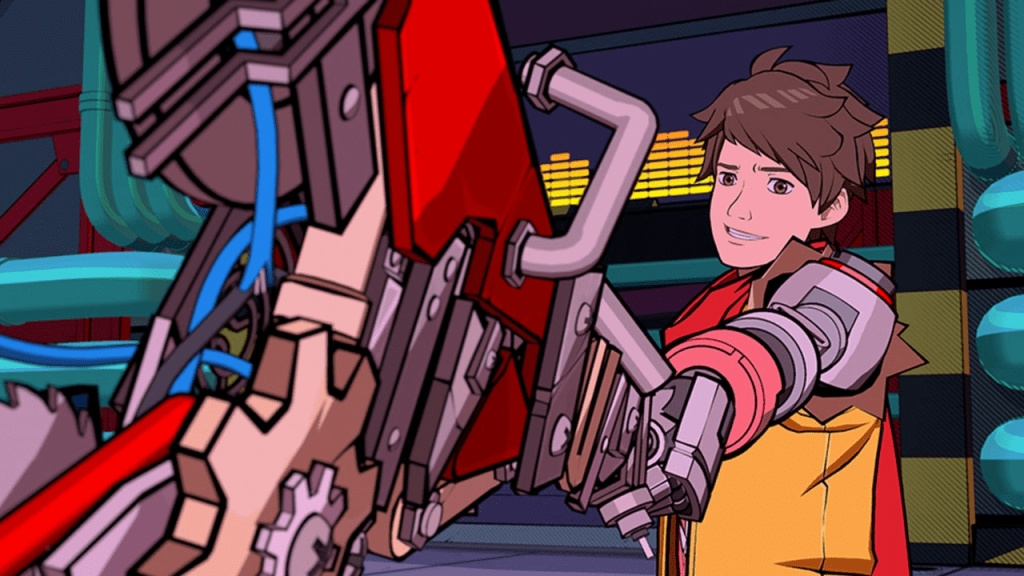
Hi-Fi Rush is experimental in many ways. With it’s sudden launch to it’s mixing of gameplay styles to it’s rocking presentation. And I would say that it succeeds more than it fails. The story is fun and relaxed, paced just long enough to be interesting without overstaying it’s welcome and it is a joy to both look at and listen to. Some tighter mechanics between the combat sections would have helped but even without that it’s still a worthwhile title that is definitely deserving of the explosion of attention it received.
 Jason Licitra